
Why Not, from Okinawa Shogo Shibata’s story of freedom, soap, and AMORE.

We want to share with the world the feelings behind Japan’s businesses, local communities, and culture. AMORE JAPAN shares the voices of people who keep taking on new challenges, both in Japan and overseas.
This article is also published in Japanese.
▶ Read the Japanese version here
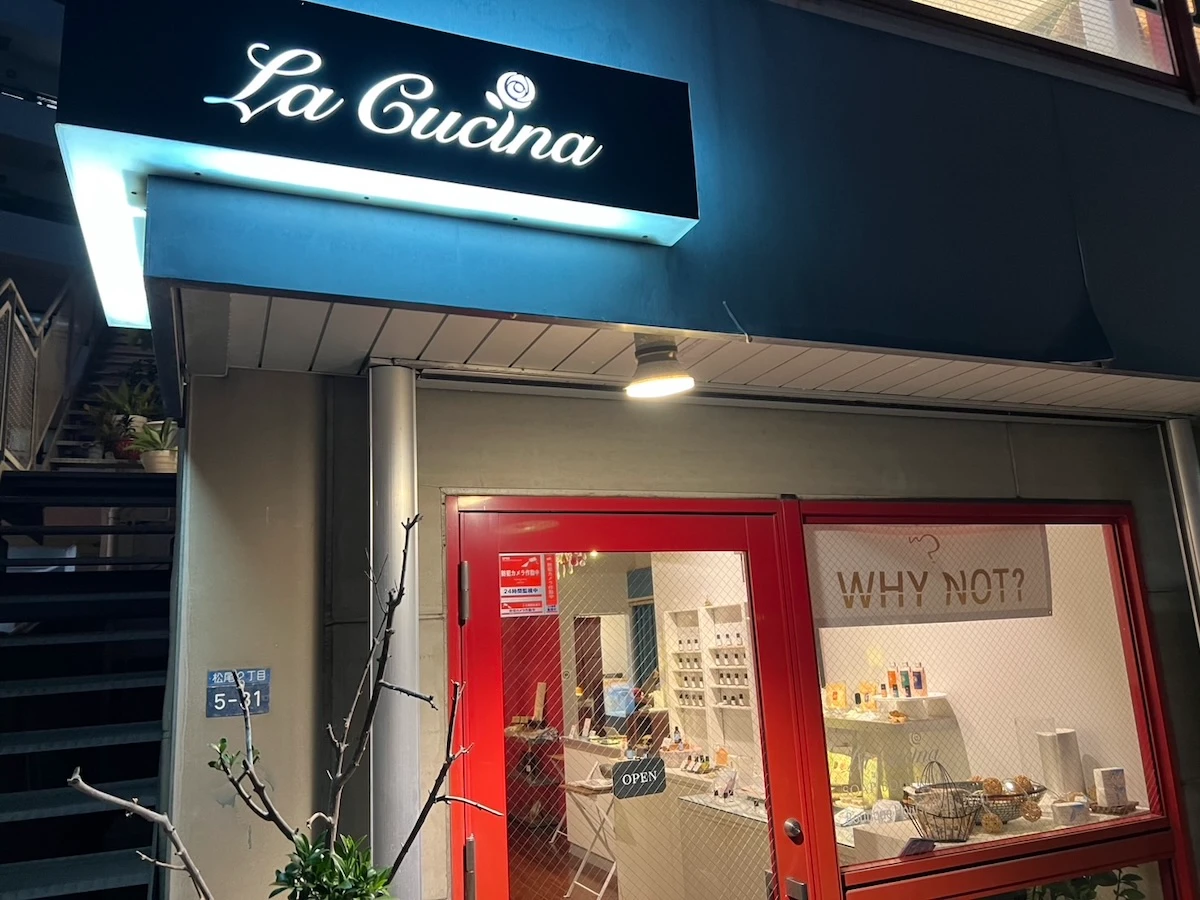
This time, we introduce Mr. Shogo Shibata, the president of Benastus Inc., which runs Okinawa Soap Studio La Cucina.
He learned how to understand people and distance in Tokyo’s nightlife world.
He later found peace in Okinawa, where he discovered the freedom of “doing nothing.”
Today, he shares his feelings about diversity through soap.
He wants to understand the words of people he meets while traveling.
He wants to answer in his own way when someone asks him a question.
He wants to use humor, wit, and a little irony to make the atmosphere his own.
And he wants to make friends around the world, meet them in person, and expand his view of life.
Meeting people.
Understanding the right distance with others.
Choosing words that feel true to himself.
Quietly placing beauty and freedom into everyday life.
Mr. Shibata already has that kind of sensitivity.
Now, he is starting to look for new words to connect with the world.
Learning Distance in Tokyo’s Nightlife World

Mr. Shibata was born in Shinagawa, Tokyo.
He grew up around Osaki, Gotanda, and Togoshi-Ginza, an area where old downtown Tokyo and the city center meet.
When he was in high school, he started going to Shinjuku.
As a teenager, he began working in Kabukicho.
He experienced many kinds of work: host clubs, restaurants, show clubs, and backstage jobs.
ーーWhat kind of work were you doing at that time?
Mr. Shibata: “My older brother was working at a place in Kabukicho. I went there one day, and the owner said to me, ‘You’re interesting. Just come every day, sing, dance, and look like you’re having fun.’”
ーーThat is an amazing way to start.
Mr. Shibata: “At that time, many people were earning about 6,000 or 8,000 yen a day. But I was getting about 500,000 to 600,000 yen a month just by showing up.”
Even when he was young, Mr. Shibata had the power to change the atmosphere just by being there.
He was not only valued for sales numbers.
His presence itself was interesting to people.
He did not just do what he was told.
He also learned how systems worked.
He learned recipes and restaurant operations, and he also helped open restaurants in other regions.
But those days were not only bright and exciting.
Strong human relationships.
The strict world of shows.
Conflicts that came from being young.
A life spent running after money.
Little by little, Mr. Shibata became tired.
Mr. Shibata: “At first, I just wanted to make money. But then I started to feel, ‘I don’t even need money anymore.’ I wondered, ‘What am I doing this for?’ My heart died once.”
In Tokyo, Mr. Shibata saw many kinds of people.
People with money.
People who had worked their way up.
People born into good families.
People who looked glamorous, but did not seem truly happy.
None of those lives felt like happiness to him.
After that, Okinawa came into his life.
Saved by the Freedom of “Doing Nothing”

When he was completely tired, Mr. Shibata went to Okinawa to see his grandmother.
There, he found something important.
He looked at the sea.
He watched the sunset.
He thought about nothing.
He did nothing.
And he realized how rich that moment was.
ーーWhat made you feel drawn to Okinawa?
Mr. Shibata: “I was just looking at the sea and the sunset. I was not thinking about anything. I was doing nothing. And I thought, ‘What a luxury this is.’ I realized that not caring so much about money, and just doing nothing in Okinawa, was the happiest thing for me.”
Around the age of 25, Mr. Shibata moved to Okinawa.
People around him thought he would not stay long.
He himself thought so, too.
But before he knew it, he had lived in Okinawa for 15 years.
ーーSo Okinawa really suited you.
Mr. Shibata: “It was so easy to breathe there. When I am in Okinawa, I feel alive. I feel alive even when I am doing nothing. And I became able to have real, meaningful relationships with people.”
“I feel alive even when I am doing nothing.”
This feeling changed Mr. Shibata’s life.
In Tokyo, maybe he felt that he had to keep working hard, or his own existence would become weak.
But in Okinawa, he did not need to prove himself all the time.
He did not need to achieve something every day.
He could just be himself.
There is sky.
There is sea.
There is space.
There are real connections with people.
For Mr. Shibata, Okinawa was the place where he found himself again.
Taking Over the Soap Business: A Coincidence That Felt Like Destiny
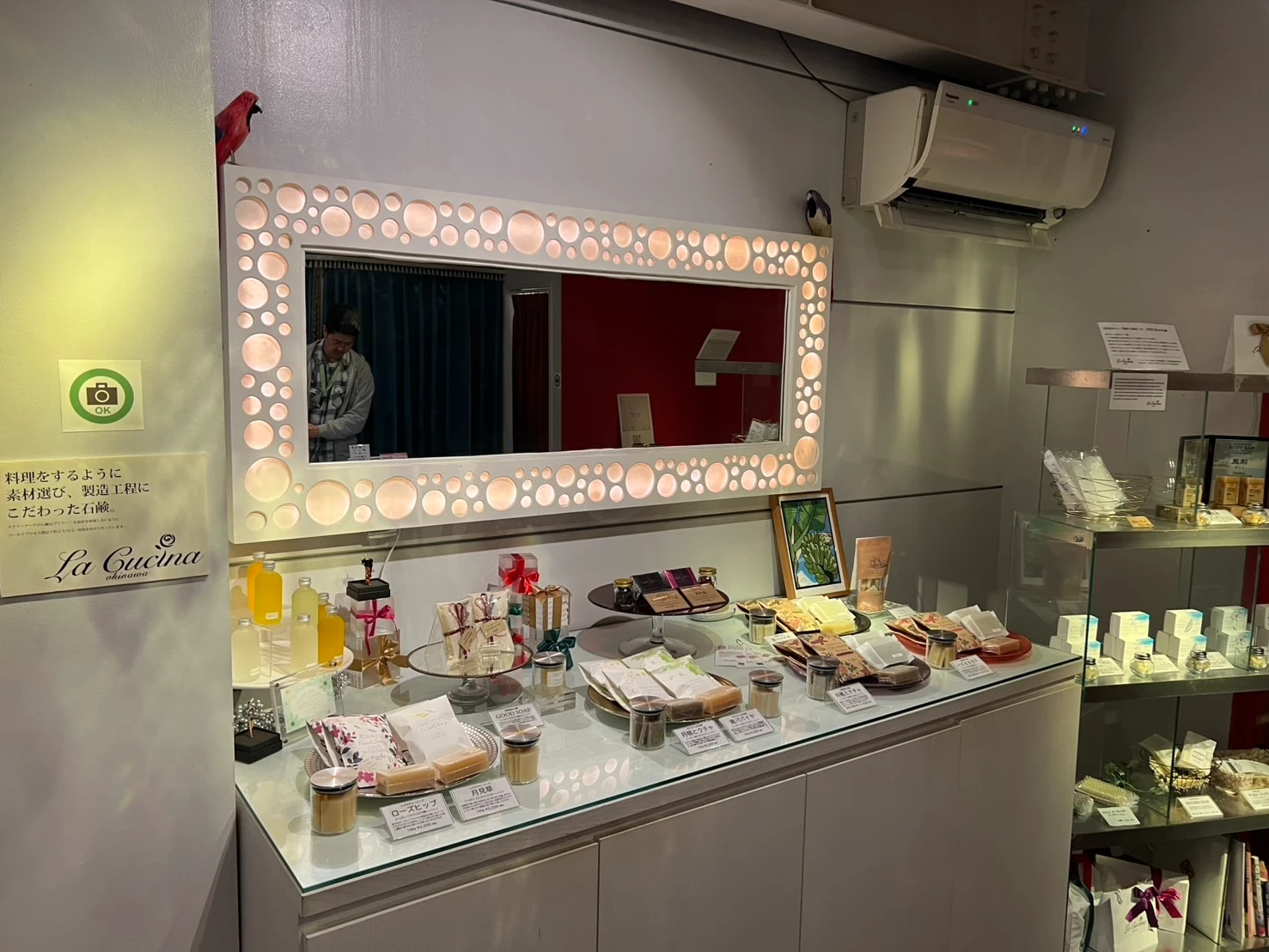
La Cucina, the brand Mr. Shibata now runs, is a soap brand that has been in Okinawa for many years.
Mr. Shibata himself had used the soap for more than ten years.
Later, he met the former female president of the company, and they became close.
She became ill and could no longer take care of the company in the same way.
Mr. Shibata offered to help her with shopping and daily life.
Then she said something unexpected.
“I want you to help with the company.”
ーーHow did you come to take over the soap company?
Mr. Shibata: “I had already been using the soap for more than ten years. Then I met her and told her, ‘Actually, I use this soap.’ We became close. Later, she asked me to help with the company. When I opened the lid, I found that I was doing everything the president had been doing.”
At first, he helped with things like managing money.
But when the former president was told that she did not have much time left, the situation changed.
Should the company close?
Would that be too sad?
Who should take it over?
In that flow, it was decided that Mr. Shibata would become the president.
Mr. Shibata: “I was planning to do nothing and just relax. But before I knew it, I had become a company president. I realized it recently and thought, ‘What am I doing?’ But maybe I felt that doing nothing was happiness because I had never really experienced doing nothing before.”
After moving to Okinawa, he spent 15 years working at a call center.
He finished work on time, watched the sunset, ate with friends, and slept.
Because he had that time, maybe he can now choose to work again.
He was saved by the freedom of doing nothing.
Now, through soap, he is trying to give someone else a little space in their heart.
That is Mr. Shibata’s way of doing business.
The View of Diversity Behind the Words “WHY NOT?”
One series from La Cucina connects strongly with Mr. Shibata’s sensitivity.
It is called GAY SOAP “WHY NOT?”
Here, we are not focusing on the small details of the soap’s ingredients or functions.
Instead, we focus on the message inside the words.
“Why not?”
Why is it wrong?
Isn’t it okay?
Why can’t we be more free?
The series shows respect for gay culture, which has led many beautiful scenes in fashion, movies, music, and art.
It also carries the idea that everyone can be free and choose what feels good for themselves.
The words “Why not?” do not shout loudly.
They ask lightly.
They do not force one “correct” answer.
They offer freedom of feeling.
They say that we do not need someone else’s permission to choose what feels right for us.
Soap touches the skin every day.
That is why it is meaningful to put the feeling of “You can be yourself” into soap.
What Mr. Shibata wants to share is not only soap itself.
He wants to share the beauty, freedom, and point of view behind it.
This way of thinking is also connected to how he sees words.
A Person Who Puts Soul Into Words
Mr. Shibata is very careful with words.
For him, it is not enough for a word to simply “make sense.”
Where did this word come from?
What background does it have?
What feeling does it carry?
What can we see if we look at it from the side, not only from the front?
These are the things that interest him.
ーーYou really care about words, don’t you?
Mr. Shibata: “When I talk with friends in Japanese, I often play with words. I like using words that people do not usually use in conversation. When people understand them, I feel happy.”
ーーYou even think about where words come from.
Mr. Shibata: “Yes. When I want to express a strong feeling with a word, I look up how the kanji was made. I look at where the word came from, and I put soul into the word.”
For Mr. Shibata, words are not just information.
They are something you place into a room.
Something you give to another person.
Something that can change the atmosphere.
Something that shows your sense of beauty.
The words “Why not?” were probably chosen in that way, too.
Not too strong.
Not too weak.
Not forcing anything, but still leaving a question.
They softly say yes to freedom.
Mr. Shibata’s AMORE also lives in this careful choice of words.
A Person Whose Words Come Out When He Is Asked
Mr. Shibata is not the type of person who keeps talking by himself.
When someone asks him a question, the words inside him begin to come out.
He watches the other person’s reaction.
He slowly finds the right distance.
Through conversation, his own shape becomes clearer.
This is connected to the sense of distance he learned in Tokyo’s nightlife world.
What does the other person want?
Is it okay to go deeper now?
Should he answer with a joke, or be serious?
Should he step closer, or step back?
He has learned to feel all of that in the air.
So what Mr. Shibata wants is not just “more conversation.”
He wants to answer with a smart, witty line when someone asks him something.
He wants to add a little irony, but with love.
He wants to choose words that make people think, “This person is interesting.”
He wants to make the atmosphere a little his own with words that feel like him.
ーーWhat would make you happy in conversation?
Mr. Shibata: “I want to be able to move the atmosphere in the room. I want it to feel a little queer and playful. The words people use are unique, both in Japan and overseas. I also want to say things with a little irony.”
This is very Mr. Shibata.
More than explaining beautifully, he wants to move the air.
More than being perfectly correct, he wants to choose words that fit the moment.
He wants to match the other person, but not lose his own flavor.
For Mr. Shibata, words are a way to feel the distance with another person.
They are also a way to softly place his presence in the room.
He Can Go Anywhere to Meet People
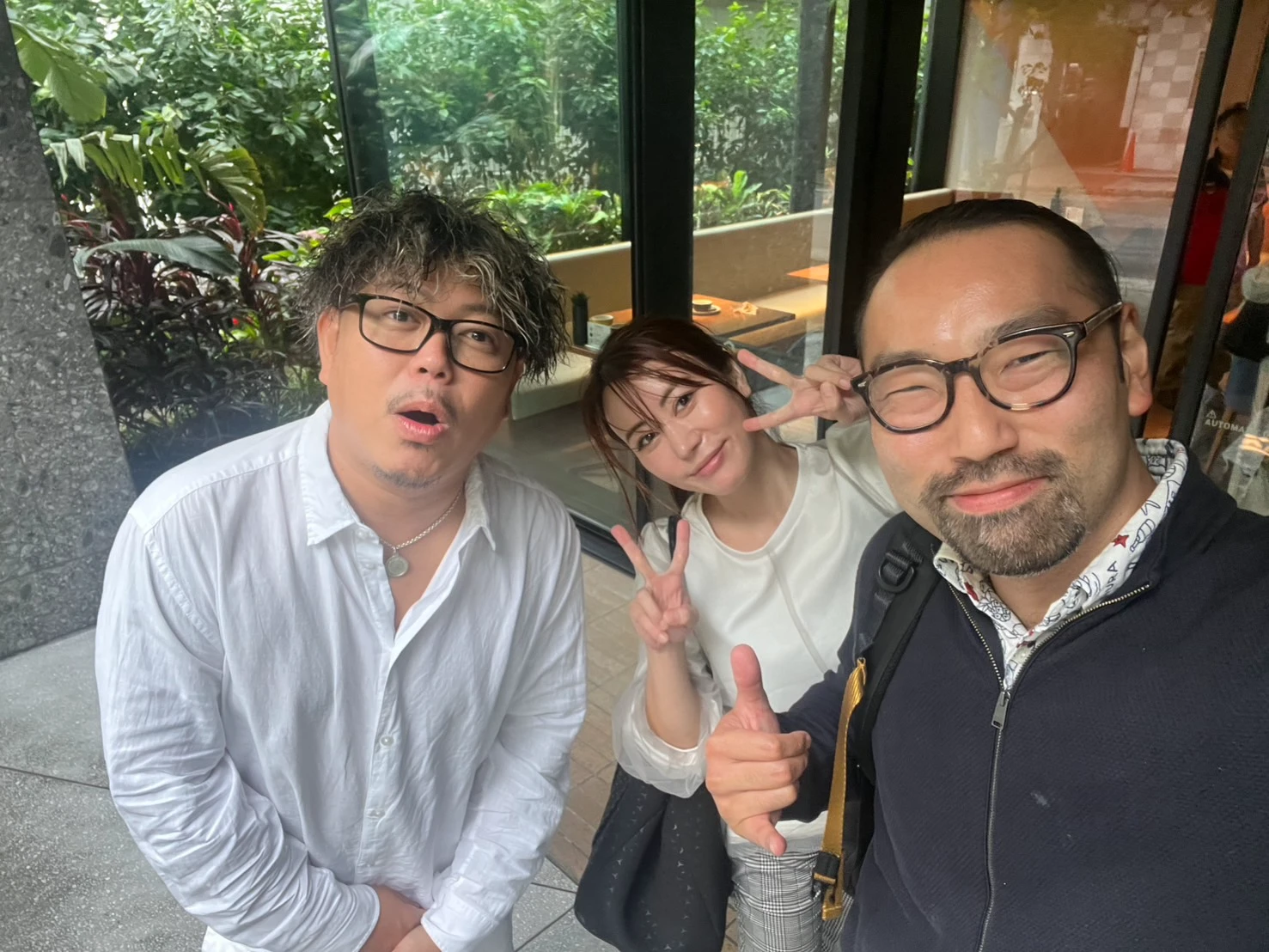
Mr. Shibata often travels.
Thailand.
Vietnam.
Taiwan.
Melbourne.
And from Bangkok to Barcelona, Amsterdam, and Paris.
His purpose is not only research.
Of course, he sometimes looks at soap and scents.
But the bigger reason is to meet people.
ーーWhat is your main purpose when you travel?
Mr. Shibata: “This past year, I wanted to do everything I had never done before. I wanted to go to places I had never been.”
ーーSo meeting people is also a big part of it.
Mr. Shibata: “Basically, I go to meet people. That is the biggest reason. If I can go to meet someone, I will go.”
This lightness is very much like Mr. Shibata.
He does not travel just to see famous places.
He does not travel only to look for products.
He goes to meet the people who are there.
When he meets people, the way he sees the world changes.
When he touches different values, his own view becomes wider.
When he meets new people in new places, his own sensitivity is renewed.
For Mr. Shibata, travel is not just movement.
It is going to meet people.
And meeting people itself may be one form of his AMORE.
He Has Been Flying Around the World, But English Was Left Behind
Mr. Shibata does not stop going out into the world just because he cannot speak English.
But while he has been traveling around the world, English had been left behind.
It was not because he had no interest in English.
In fact, he had felt the need for it for a long time.
But he felt far away from English as “study.”
Mr. Shibata says that he almost has no memory of “studying.”
Since junior high school, he was far from the experience of sitting at a desk and learning.
So he felt that ordinary English lessons, where you open a notebook and study grammar from the beginning, would be difficult for him.
ーーWhat made you decide to try English?
Mr. Shibata: “An Okinawan business owner I trust introduced me to Mr. Ogura. Since it was an introduction from someone I trust, I felt, ‘Then I will try it.’”
His meeting with Shintaro Ogura, the creator of AMORE, did not begin only with the need for English.
It began with trust in a person.
If someone he trusted introduced him, he would meet that person.
Even if normal study was impossible, maybe speaking practice could work.
Maybe he could learn through conversation, not by sitting alone at a desk.
For Mr. Shibata, the entrance to English lessons was not, “I should study.”
It was more like this:
“Maybe these people will think with me about a way that fits me.”
That became his first step.
Looking for His Own Words in the World
Mr. Shibata has now started learning English.
But it is not only to become “a person who can speak English.”
It is to use the sensitivity he already has when he talks with people around the world.
The ability to feel distance with people.
The care he gives to choosing words.
Humor with a little irony.
A view of diversity.
The feeling that his words come out when someone asks him something.
All of these things are already inside him.
But to share them with people around the world, he needs one more language.
ーーWhen you travel overseas, how do you feel about language?
Mr. Shibata: “The more I travel, the less afraid I feel of English. But after getting used to that, I feel like I should take one more step toward it. I want to understand what they are saying.”
ーーDo you feel that you first want to understand what people are saying, even before speaking?
Mr. Shibata: “Even if I cannot speak, if I can understand more, I think the range of communication will become much wider.”
Mr. Shibata is not looking for perfect English.
He wants to understand a little more of what the other person is saying.
He wants to understand jokes and irony in the moment.
He wants to answer in his own tone when someone asks him a question.
And he wants to move the atmosphere a little with his own words.
English is not the goal for Mr. Shibata.
It is one tool to use the AMORE he already has with people around the world.
He Cannot Continue Alone. That Is Why He Needs Someone Beside Him
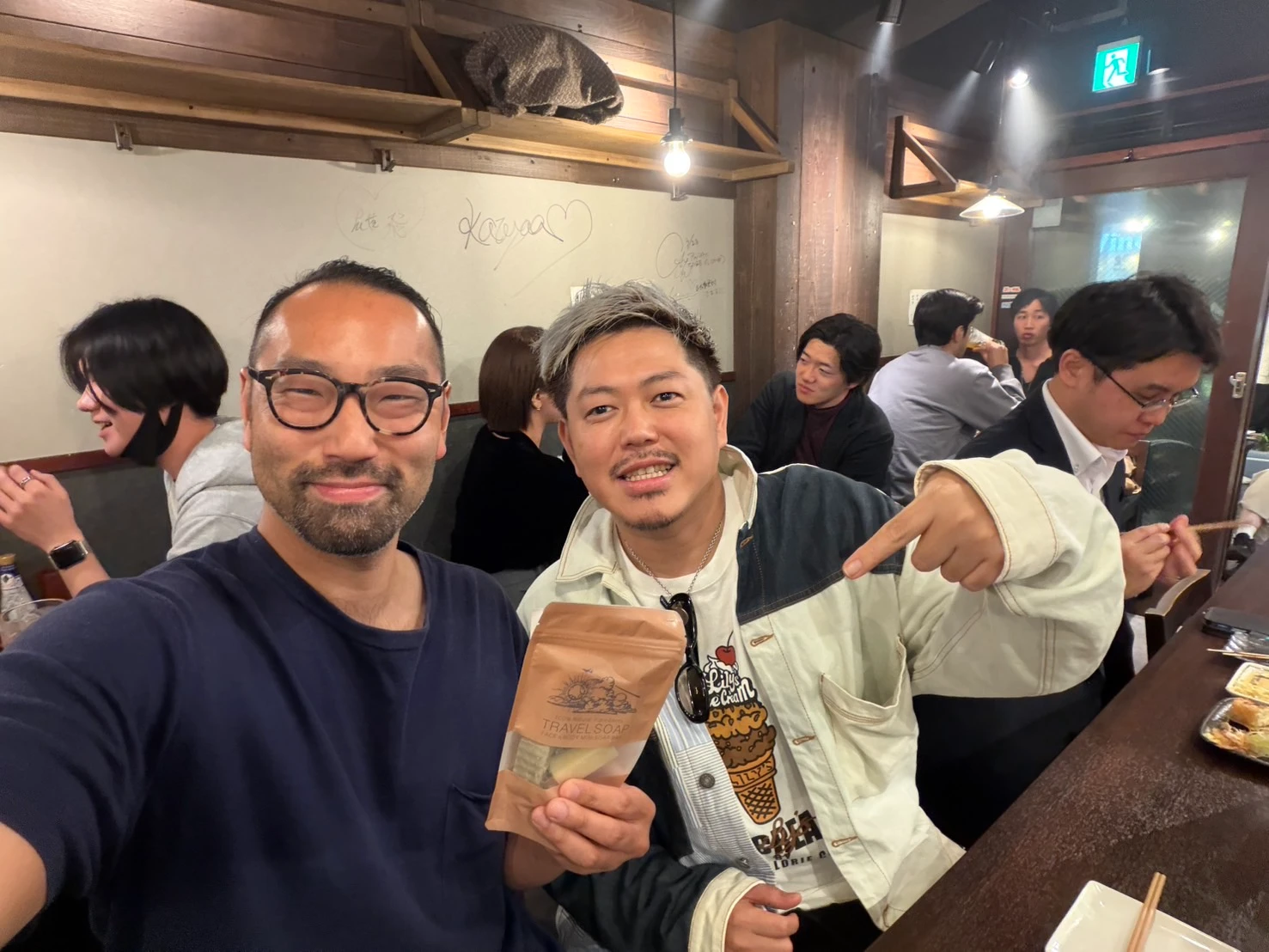
Mr. Shibata is honest about the way he learns.
He is not the type to sit alone at a desk and study quietly.
He is the type who switches on when another person is in front of him.
Even in his school days, he was far from what people usually call “study.”
In junior high school, he almost did not go to school.
He did not really have the experience of opening a notebook and learning grammar step by step.
That is why he felt that normal classroom-style English lessons would not fit him.
ーーWhat kind of learning style seems right for you?
Mr. Shibata: “I do not do it unless there is a person there. I cannot do it alone.”
ーーSo it would be better to have many face-to-face lessons or support?
Mr. Shibata: “I would be happy if there were many detailed face-to-face schedules. I cannot do it by myself.”
Mr. Shibata also spoke openly about his ADHD.
He says he is always thinking about three or four things at the same time.
Several “worlds” are moving in his head at once.
Sometimes he cannot control the switching between them well.
That is why “having someone in front of him” is so important.
Someone is there.
Someone asks him questions.
Someone brings him back to the present moment.
Someone shows him clearly what to do next.
With that kind of environment, his switch can turn on.
This is not simply a story about being bad at continuing.
It means that Mr. Shibata needs an entrance to learning that fits him.
Not memorizing alone, but learning while talking with someone.
Not sitting at a desk, but learning through conversation.
Not just memorizing, but understanding the reason why something is said.
Not managing the schedule alone, but having someone show him the steps clearly.
Not only feeling.
Not only logic.
He needs a person, questions, the background of words, and a place to search for expressions that fit him.
That is the kind of learning Mr. Shibata needs.
With that feeling, he began to face English.
After actually starting, he did not feel that he was only being taught English.
He felt that they were thinking about him as a person.
What kind of person is he?
What kind of learning style can continue for him?
Where does he get stuck?
What kind of words feel like his own?
They start from there.
They are looking for a way of teaching that fits him.
Mr. Shibata trusts that attitude.
ーーAfter trying it, what did you think of Mr. Ogura?
Mr. Shibata: “I felt that he really thinks about me. He thinks about how to teach in a way that fits me. I truly respect that.”
For Mr. Shibata, learning English is not a time to fill his head with knowledge.
It is a time to talk with someone who walks beside him, in Japanese and English.
It is a feeling of increasing his tools so he can put what he wants to say into words.
It is a time to search for words that feel like him, without denying his own nature.
And for that, he does not need to be alone.
He needs someone to walk with him.
AMORE Is Not Only About English
The most important part of Mr. Shibata’s story is not simply that he is learning English.
Before he started learning English, AMORE was already inside him.
Going to meet people.
Reading the air between people.
Putting soul into words.
Putting a view of diversity into the question, “Why not?”
Trying to give someone else a little space in their heart, from Okinawa, where he was saved by the freedom of doing nothing.
English is one way to use that AMORE in the world.
If Mr. Shibata becomes able to speak English, he will not become a different person.
The sensitivity he already has will slowly begin to appear in conversations with people overseas.
That is what learning means for him.
If he only wanted to explain a product, short words might be enough.
But what Mr. Shibata really wants to share is not only the function of soap.
It is the space he found again in Okinawa.
Respect for gay culture.
The freedom to choose what feels right for yourself.
The care he gives to words.
And the wish to meet someone and make the atmosphere a little more fun.
Mr. Shibata is now taking a new language into his hands so he can share these things with people around the world.
When he is asked, words come out.
When the words come out, his true self appears.
Those words bring him a little closer to someone else.
What is there is not English itself.
It is Mr. Shibata’s own AMORE, moving toward the world.
.webp)
.webp)
.webp)