
From Kyoto to Noto, in His Own Words Mr. Miyasaka’s story of craft, community, and English.

We want to share with the world the passion behind Japan’s businesses, local communities, and culture. AMORE JAPAN introduces the voices of challengers who work every day to bring those stories to people in Japan and abroad. For this reason, this article is also published in Japanese.
▶ Read the Japanese version here
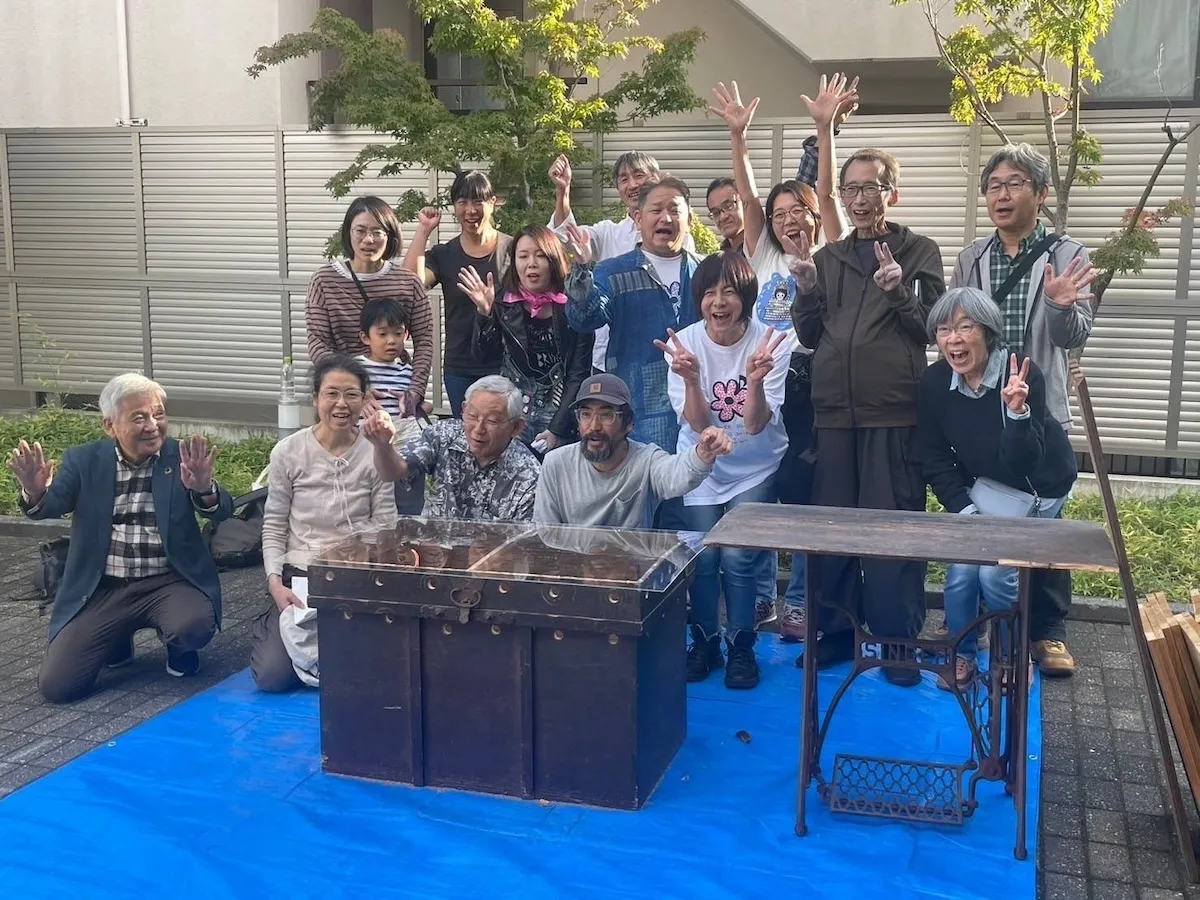
This time, we introduce Mr. Miyasaka, a craftsman involved in traditional carpentry and woodworking in Kyoto, who is also currently supporting recovery efforts in Noto after the earthquake.
This is the story of a craftsman who wanted to connect more deeply with people from overseas, and who, through English, learned how to turn the feelings behind his work, his community, and his culture into words that could truly reach others.
Many people want to tell people from overseas about the appeal of their work or their local community. But when the moment comes to speak, they often find that they do not have enough words.
They can name famous sightseeing spots. They can shop and have simple conversations. But why do they love that place? Why do they continue doing that work? Why do they want someone to walk down this particular street?
When you try to communicate that much, English is no longer just a tool for conversation. It becomes a weapon for shaping the feelings inside you into something that can reach another person.
From “I Can Somehow Speak” to “I Want to Communicate More Deeply”
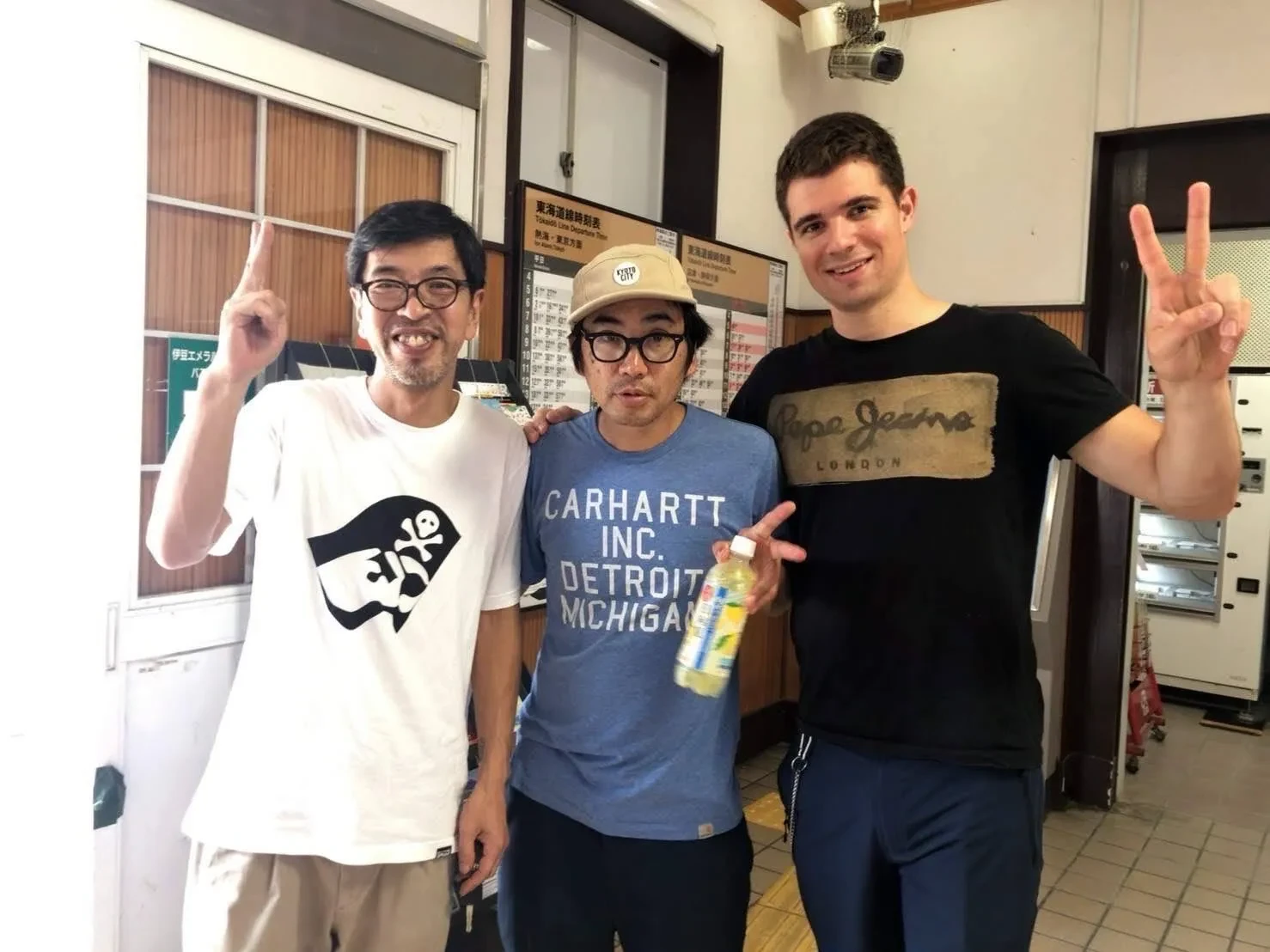
Mr. Miyasaka has always loved traveling abroad.
When he lived in Tokyo, he worked while continuing to play music, and he says he traveled overseas about once every two years.
He also went to the United States for buying trips, and when it came to shopping or simple exchanges, he could manage in English.
But as he made more friends from overseas, he gradually began to feel something.
He could somehow communicate.
But he wanted to have deeper conversations.
He could talk about music or hobbies by connecting words together, but when he tried to express what he truly felt, what he wanted to share with others, or the feelings behind Japanese culture and his own work, he felt he did not have enough words.
That was what he began to realize.
ーーWhat made you want to properly study English conversation again?
Mr. Miyasaka: “Well, there were quite a few foreign people around me, but I started to feel my limits. I thought that unless I learned properly, I wouldn’t improve any further.”
ーーSo it wasn’t that you couldn’t speak at all. It was more that you wanted to be able to speak more deeply.
Mr. Miyasaka: “Yes. I had gone to the U.S. for buying trips, so I could at least shop in English. If it was about music or hobbies, I could connect words together and somehow have a conversation. But I couldn’t really go any deeper than that. I wanted to be able to have those kinds of deeper conversations.”
For Mr. Miyasaka, English was not just a tool to avoid trouble overseas.
It felt like a language he needed in order to send what was inside him to someone a little farther away.
It was around that time that he encountered the English lessons of Shintaro Ogura, the creator of AMORE.
Words Begin to Move Forward, as If Someone Is Pushing You from Behind
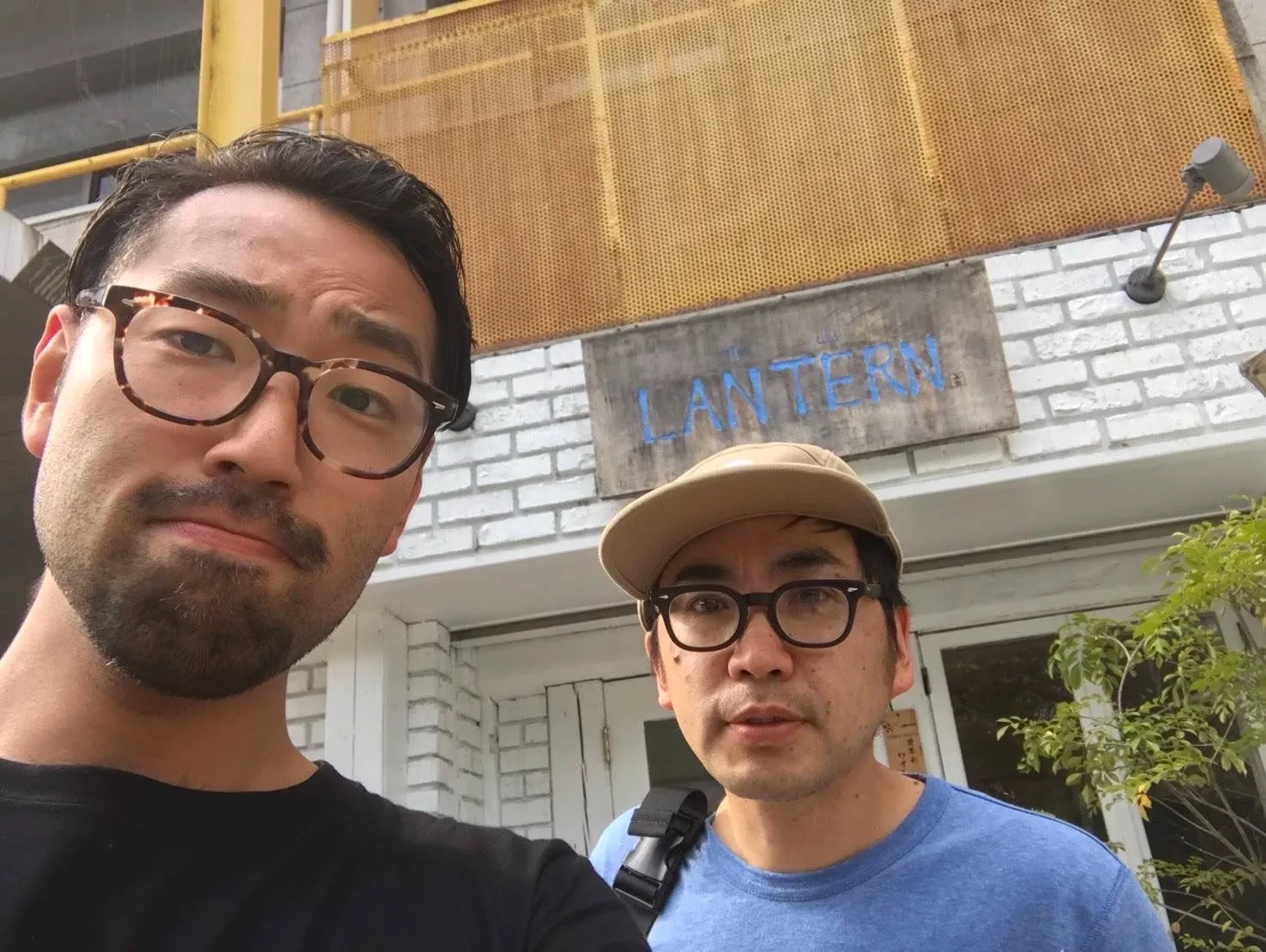
What left the strongest impression on Mr. Miyasaka about Ogura’s lessons was that there was overwhelmingly more time spent speaking than listening to explanations.
Picking up a foreign friend at the airport.
Reuniting with a friend after a long time.
Guiding someone through the streets of Kyoto.
He would be given specific situations like these, think about what he would say in that moment, and speak in English. Expressions he could not say well would later be reviewed through rephrasing and practice patterns.
ーーWhat did you especially like about speaking with Ogura?
Mr. Miyasaka: “It felt like I was made to speak a lot, or like I was being pushed from behind. It was as if he kept pushing me forward. He gave me momentum, so I would speak with that momentum. And when I did, there was a sense of fulfillment. It also felt like the words really entered my head.”
ーーSo the amount of speaking was different from other English conversation lessons.
Mr. Miyasaka: “Yes. In other lessons, you listen to explanations, speak a little, then take turns speaking and finish. I think there was a lot more explanation.”
ーーWhat kinds of situations were used in the role-play?
Mr. Miyasaka: “For example, there was a setting where I was going to pick up a foreign friend at the airport, and I would speak to them when they came out. Then I would be told, ‘Okay, go ahead,’ and I would have a conversation in that imaginary situation. There were sections for phrases, sections for sentences, and sections like conversation role-plays, but in all of them, the main focus was that I was the one speaking.”
Learning English is not only about memorizing grammar.
It is about moving toward the other person with your own words.
What Mr. Miyasaka received from Ogura’s lessons was not only knowledge of English.
Even if you make mistakes, first try speaking. Even if the words are not perfect, try to communicate with the other person.
For Mr. Miyasaka, the time that pushed him forward like that was AMORE itself.
Guiding People Through Kyoto’s Streets Is a Way of Handing Over Love for the Land
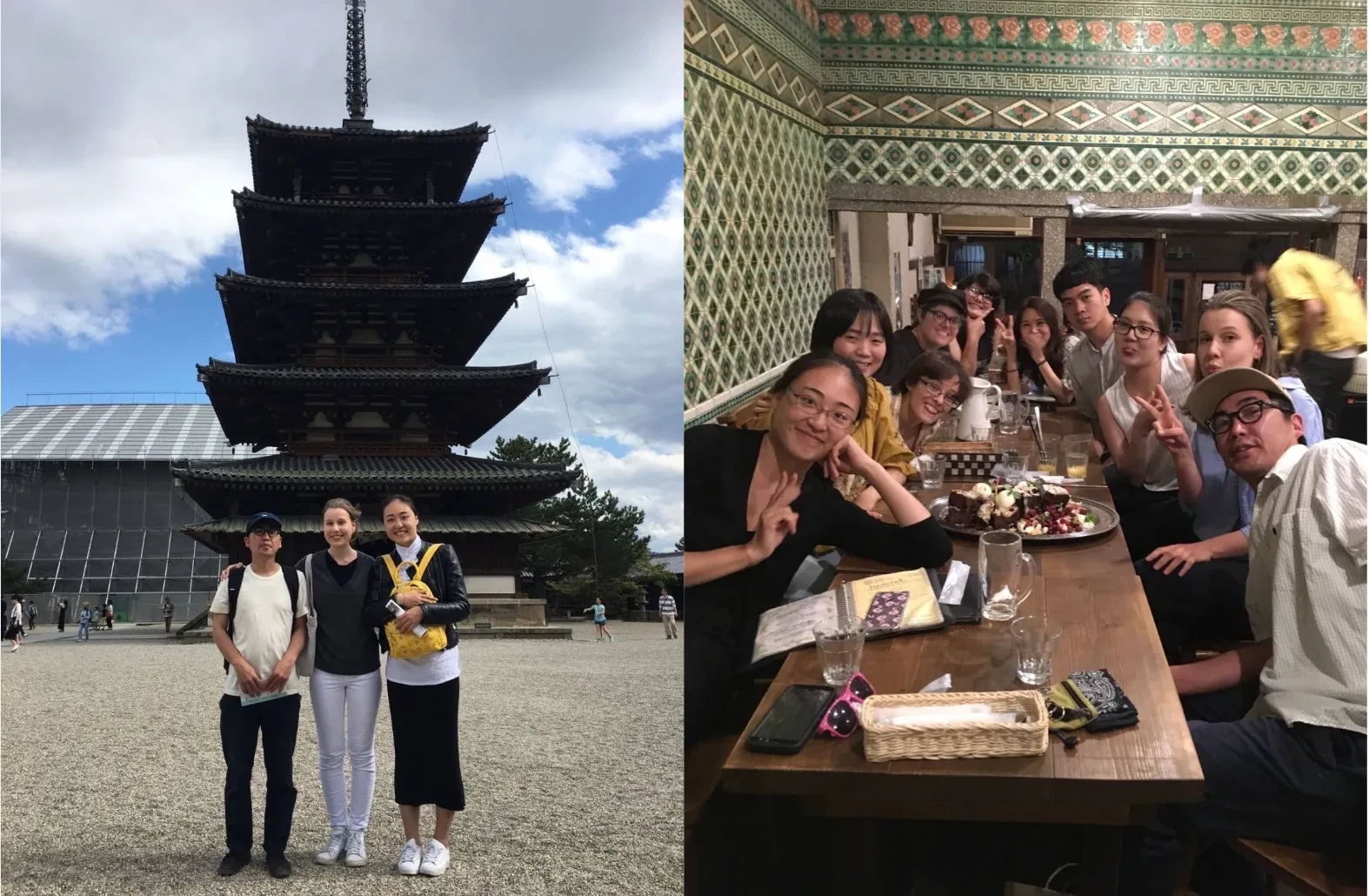
As Mr. Miyasaka studied English, changes began to appear in his daily life.
Kyoto has many international students and long-term foreign residents.
Mr. Miyasaka began to have more opportunities to guide people to temples and shrines in English, or to go out for meals together.
Among all of those experiences, what he especially enjoyed was walking through Kyoto’s old streets while guiding people.
ーーOgura said that your walking routes are really wonderful.
Mr. Miyasaka: “I like walking. In Kyoto, there are old roads that still remain, so I imagine that people in the past may have walked this way to get somewhere. I like guiding people through routes like that.”
ーーSo it’s not just about showing people famous sightseeing spots.
Mr. Miyasaka: “I like choosing good streets where cars don’t pass much, and walking while explaining things along the way. I’m not sure how much people understand, but I did that quite often.”
Maybe people in the past walked down this road.
Maybe this alley holds layers of time like this.
While choosing streets with little traffic, he communicates Kyoto at a walking pace.
It is not just about explaining information found in tourist guides.
It is about walking a path he truly believes is good, with his own feet, and introducing it in his own words.
There is Mr. Miyasaka’s AMORE for Kyoto in that act.
English was not necessary only for guiding people.
It was necessary so he could hand over the place he loves in a form that would remain in someone else’s memory.
Speaking English Creates “Another Version of Yourself”
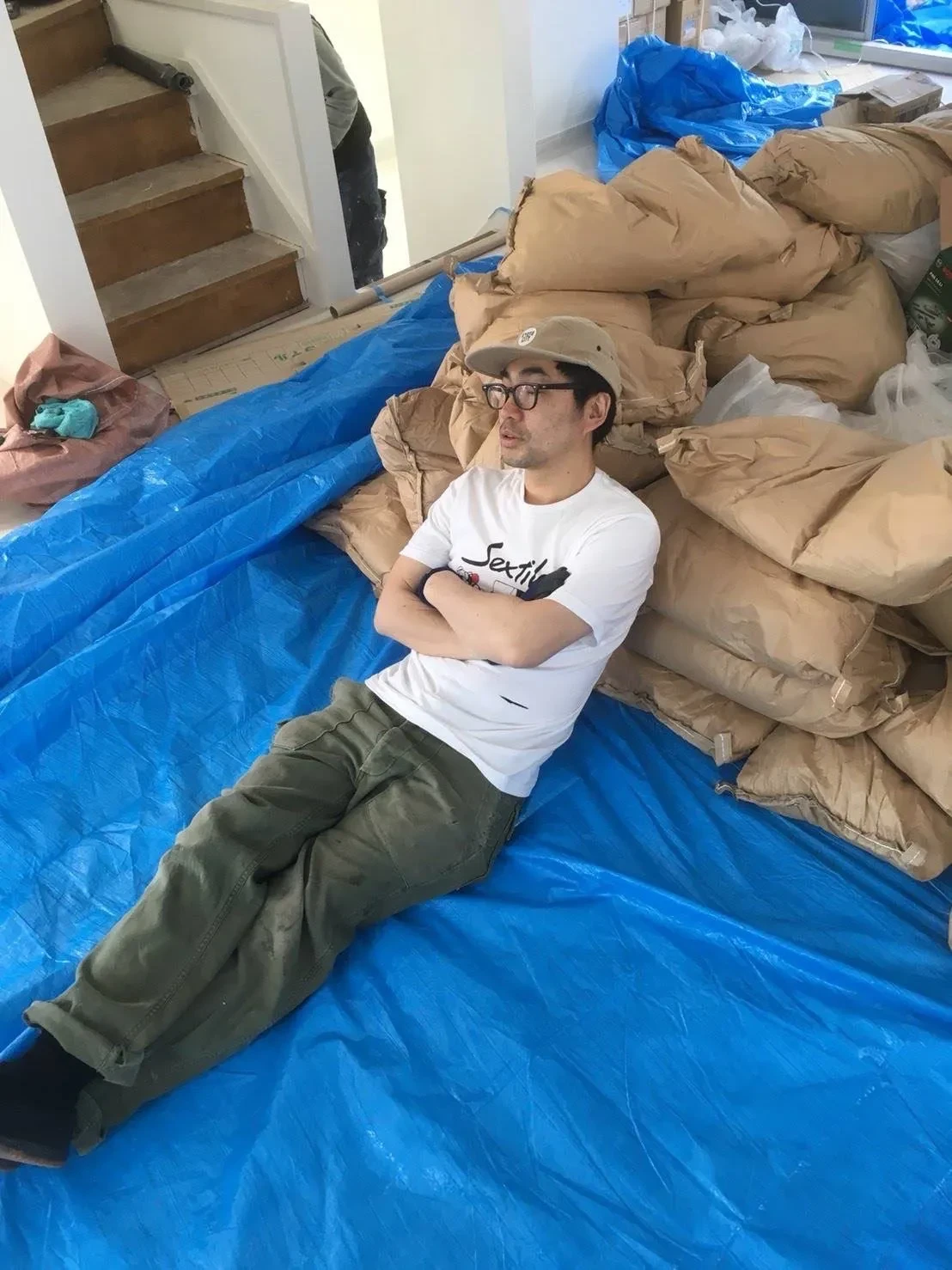
Mr. Miyasaka says that learning English gave him a sense of being able to look at himself more objectively.
In Japanese, emotions can come out directly. But in English, he first has to think, “How can I say this so it will be understood?” That one extra step helped him organize what he likes, what he does, and the outline of who he is into a form that could be communicated to another person.
ーーWhat changed in you before and after learning English?
Mr. Miyasaka: “I think I gained a perspective where I can look at myself objectively and explain myself. I feel like I became better than before at explaining my own image or my own character. So I think people started finding me more interesting. Whether they were men or women.”
ーーSo before translating yourself into English, you became better at organizing who you are.
Mr. Miyasaka: “I think that’s right. When I talk about myself in English, it feels like there’s an English version of my character inside me. It’s like seeing myself from the perspective of my English-speaking self. I feel like I started looking at myself more objectively.”
ーーSo a slightly different version of yourself appears compared with when you speak Japanese.
Mr. Miyasaka: “When I speak English, in a way, it feels less subjective. Maybe it’s because I can’t speak perfectly, but it feels as if another person is speaking. In Japanese, I express my feelings directly, but in English, there’s a moment where I think first. As I keep doing that, I feel like a version of myself for explaining things begins to form.”
This is not only a change in English ability.
It is a change in the ability to understand oneself.
It is a change in the ability to explain oneself.
And it is a change in the ability to shape one’s own AMORE into something that can reach another person.
Not just saying that you like something, but explaining why you like it.
Not just explaining your work, but speaking about the feelings behind it.
Listening to what the other person is looking for, and responding with words that fit that person.
Learning English is not only about learning another language.
It is also about editing yourself once again for the world.
AMORE Lives Where Conversation Is Born
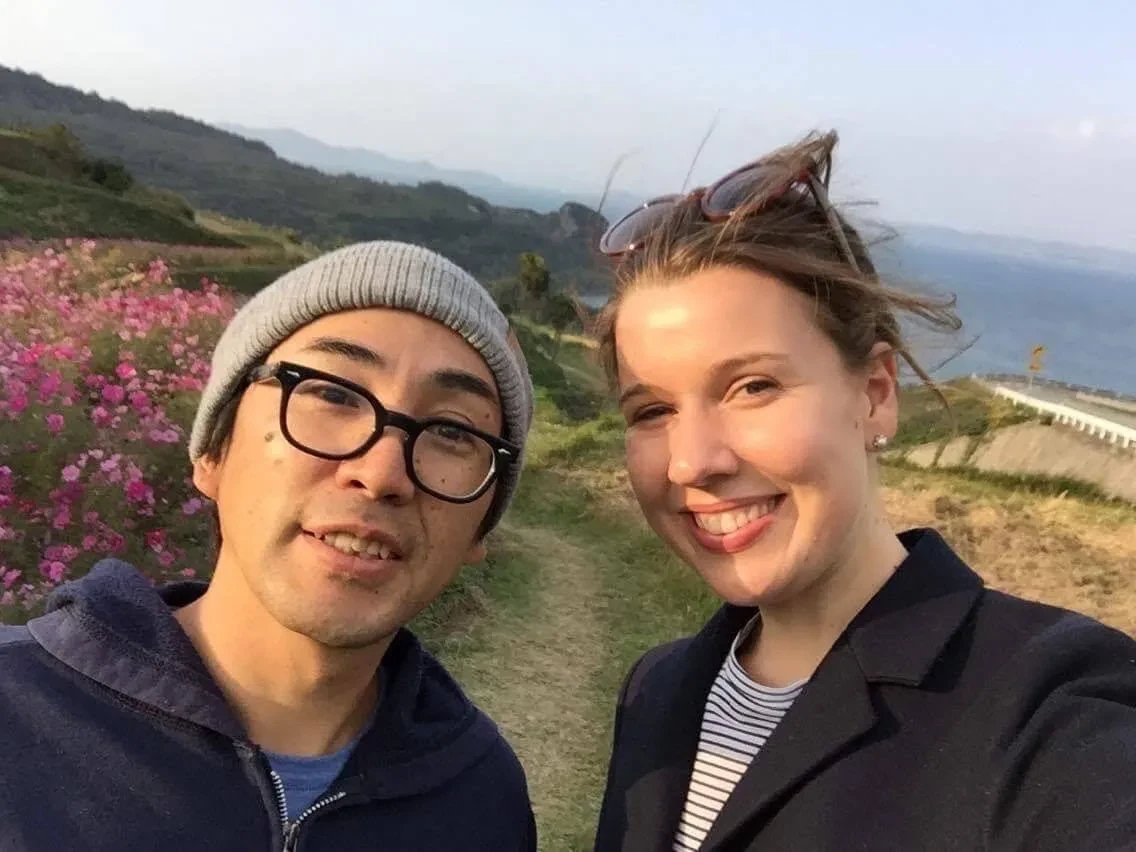
For Mr. Miyasaka, the appeal of AMORE is not limited to romance.
Making friends.
Getting along with people.
Enjoying conversation.
Taking interest in the other person while also sharing yourself.
Mr. Miyasaka sees great value in AMORE when it includes this broader kind of human charm.
ーーWhat impression did you have when you heard about AMORE English conversation?
Mr. Miyasaka: “I think it’s really good. Business English is broad, and it all feels like studying. But if you begin from wanting to make friends, or from romance, you can start from what you’re good at.”
ーーSo if you start from what you like, you learn faster?
Mr. Miyasaka: “Yes. If it’s something you’re good at, it’s easier to remember the words. Once you learn the adjectives and grammar around those words, you can keep inserting the words you like. If you’re talking with someone from overseas who shares a common interest, I think it’s faster than business English.”
ーーIf we think of AMORE not only as romance, but as the ability to be loved as a person, it expands.
Mr. Miyasaka: “Yes. If you think of it not only as being loved romantically, but also as making friends, as being loved by people in a broader sense, or becoming someone people like, I think it’s very healthy and good. The more friends you have, the more romantic possibilities can actually open up too, and there are also great benefits for you as a person.”
Words about things you like are easier to remember.
Topics you like make you want to speak.
Places you like make you want to guide people.
That is why conversation continues.
Making friends with people you meet in town.
Talking casually with someone at a bar.
Recommending not a famous tourist spot, but a place you personally love.
Saying, “If that’s what you’re looking for, I think this place would be good,” based on your own sense.
That is not just speaking English.
It is AMORE: trying to make the other person’s time as enjoyable as possible.
A Conversation Comes Alive When Your Interests and the Other Person’s Interests Meet
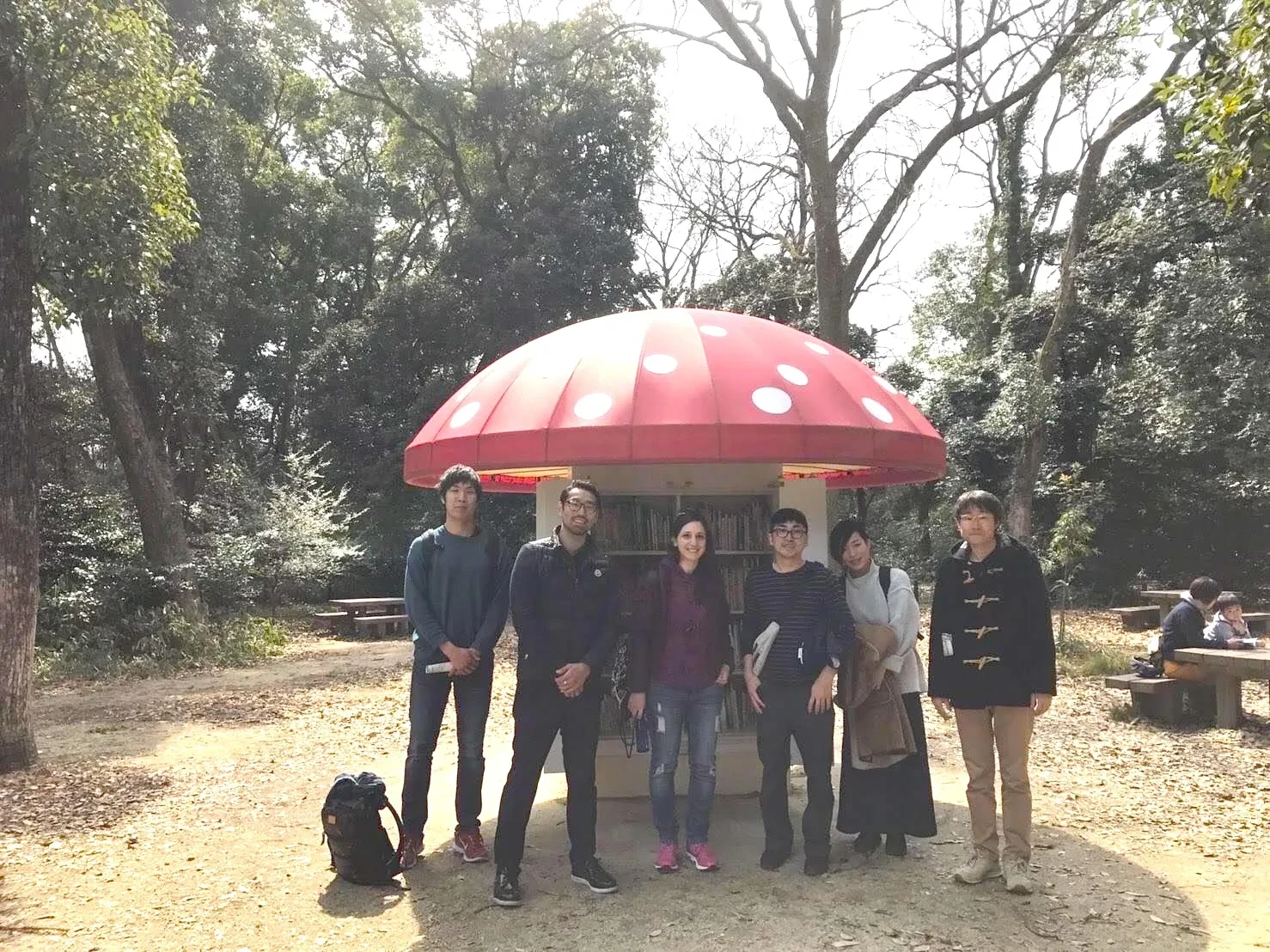
Mr. Miyasaka describes the joy of speaking English as the feeling of a conversation continuing.
A conversation is not born when you simply say what you want to say one-sidedly.
Nor does it move the heart when you only talk safely about general topics.
What matters is having a story that only you can tell.
And listening to what the other person is looking for.
ーーDoes it make you happy when a conversation gets lively?
Mr. Miyasaka: “Yes. When a conversation continues, it’s interesting. If I can make someone laugh, it makes me happy.”
ーーWhat do you think makes the difference between a conversation that becomes lively and one that doesn’t?
Mr. Miyasaka: “Simply put, I think it depends on whether there is a common interest. If there is a shared interest within the topic, the conversation goes deeper. Also, maybe it matters whether both people are interested in each other.”
ーーFor example, even when guiding someone, it is important not only to talk about information in guidebooks, but also to talk about what you truly think is good.
Mr. Miyasaka: “Yes. Even talking about ramen shops would be fine. I think it would be great if I could properly explain that although a place may not be in a guidebook, this kind of ramen is actually liked by locals. It can be something very small. You could say, ‘Why don’t you try going here?’ or recommend a place that isn’t a typical sightseeing spot.”
ーーSo the ability to listen to what the other person is looking for is also necessary.
Mr. Miyasaka: “Yes. It’s important to listen to what kind of thing the other person wants, and then be able to say, ‘In that case, maybe this would be good.’”
Here we can see Mr. Miyasaka’s view of why English is necessary.
English is not only for saying the correct answer.
It is a way to open your own drawers according to the other person.
It is a way to listen to what that person wants to know, and to hand over the places and culture you love in a form that can reach them.
Finding the Future in What Was Broken in Noto
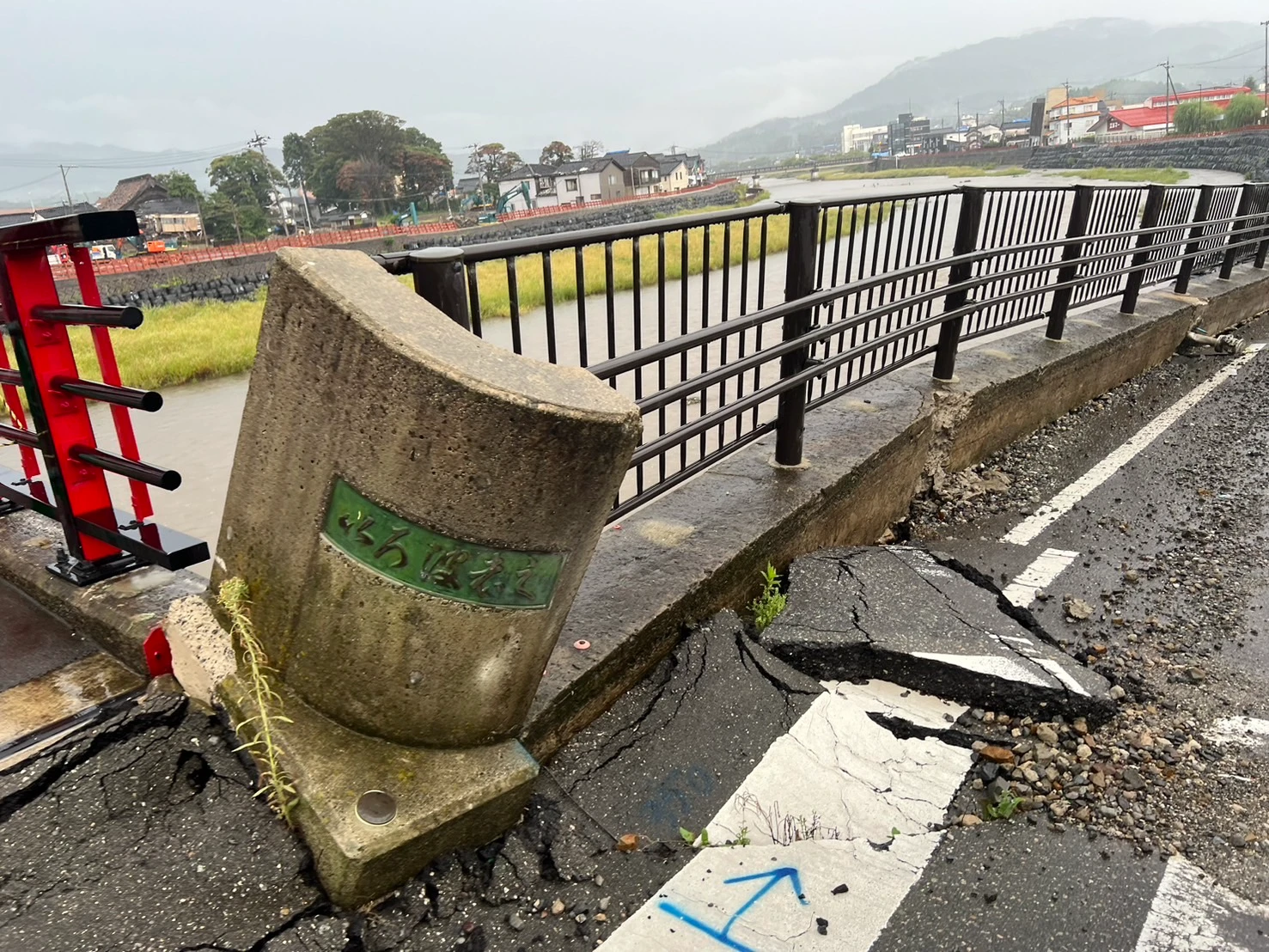
Today, Mr. Miyasaka is also involved in recovery support activities in Noto after the earthquake.
Repairing damaged houses.
Building small hut-like structures.
Taking materials that can still be used from houses that are going to be demolished.
Supporting places where volunteers can stay and supporters can gather.
This is not only work that creates buildings.
It is work that creates places where people can gather.
It is work that finds what can lead to the next future from what has been lost.
ーーWhat kind of activities are you doing in Noto now?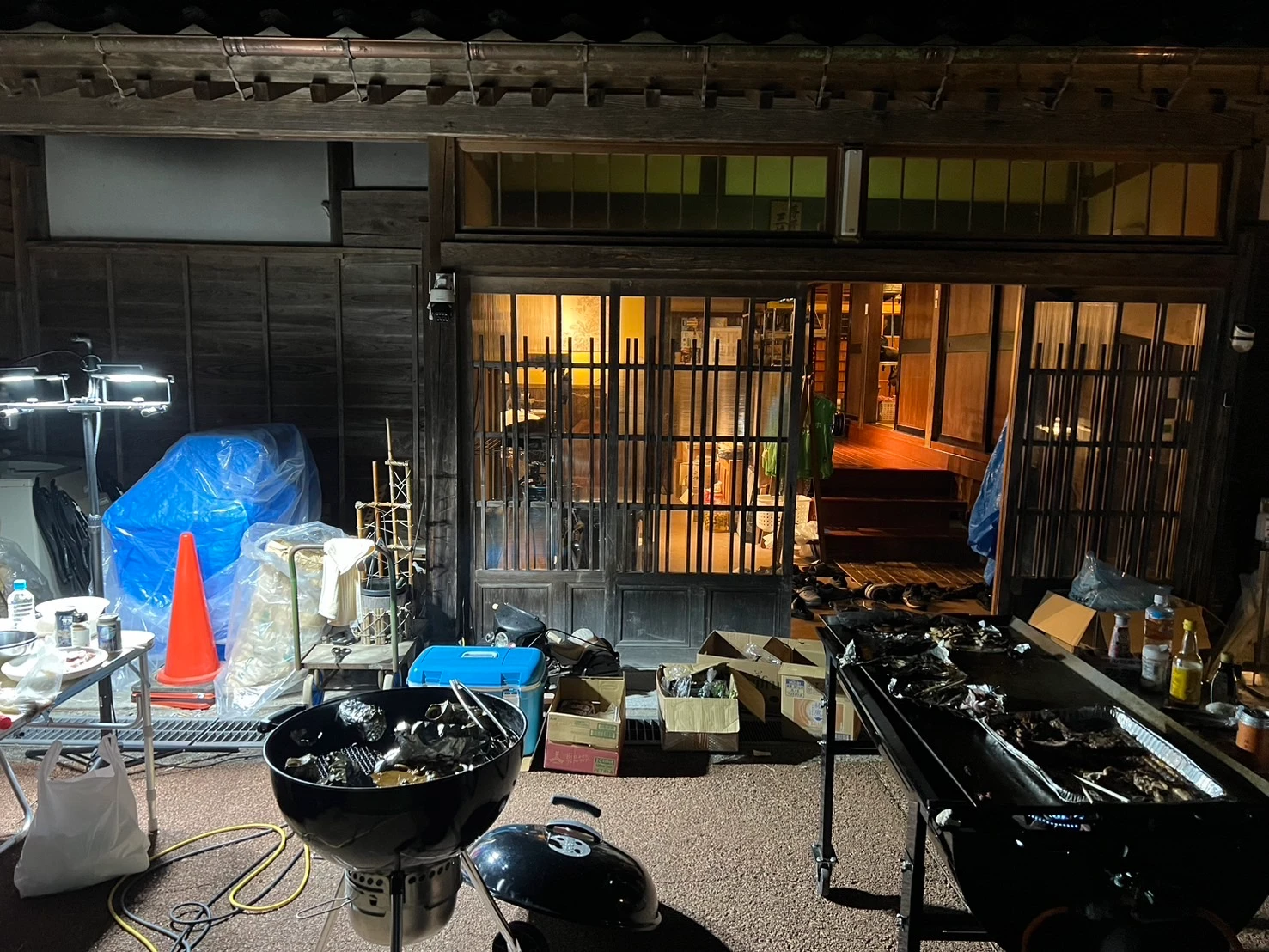
Mr. Miyasaka: “I’m involved in recovery support activities after the Noto earthquake. Rather than building temporary housing, a lot of what I do is supporting the supporters. There aren’t many places to stay, so we repair damaged houses, build new small hut-like spaces, and take materials that can still be used from old houses that are being demolished, then repair and reuse them.”
ーSo it is also about creating places for volunteers.
Mr. Miyasaka: “Yes. I don’t only like building things. I also quite like creating communities.”
ーーWere you also involved in that kind of place-making in Kyoto?
Mr. Miyasaka: “In Kyoto, my main work was renovation, but I also did woodworking and DIY workshops. Everyone enjoyed them, and they became quite lively.”
In Kyoto, too, Mr. Miyasaka worked on renovations while also holding woodworking and DIY workshops. What mattered there was not only making things.
People gathering.
Conversation being born while people move their hands.
People who did not know one another sharing the same time.
There is always a sense of “creating a place” in Mr. Miyasaka’s work.
Working with wood.
Guiding people through streets.
Speaking in English.
Taking part in recovery efforts.
These may seem like separate activities. But at the center of all of them is AMORE that connects people to people.
AMORE for Shintaro Ogura, the Creator of the Method
The relationship between Mr. Miyasaka and Shintaro Ogura is not merely that of an English teacher and student.
They met through English lessons, and since then, their relationship has continued in many forms, including the installation and dismantling of language-learning spaces and meeting again in Noto. Today, they are friends and people who support each other’s activities.
ーーWhat makes Ogura easy to be around?
Mr. Miyasaka: “His perspective is interesting, and he has the ability to take action. He is positive, and there’s a feeling that he might do something that has never existed in the world before. Talking with him is interesting. His ideas are unique, but they aren’t too far out there. It feels like they could actually happen. He makes me feel that if I can help, I want to help. I want to support him.”
ーーThere also seems to be a feeling in your work of giving form to something new.
Mr. Miyasaka: “Yes. I think we may share the desire to put something into the world that is a little better than what existed before. It’s the feeling of trying something because you think, ‘Wouldn’t it be better if it were more like this?’”
This is not merely an evaluation of a service creator.
I felt Mr. Miyasaka’s AMORE for Shintaro Ogura as a person.
Mr. Miyasaka himself also has the desire to “put something a little better than before into the world.” He gives form to the feeling that something could be better. That attitude overlaps with the philosophy AMORE values.
AMORE is not only a service for teaching English.
It is a method for transforming the feelings inside a person into something that can reach the world.
English Exists to Deliver AMORE to the World
What Mr. Miyasaka’s story teaches us is that the necessity of English is not only about qualifications or test scores.
It is for communicating your work to someone else.
It is for opening your land to the world.
It is for leaving your culture in someone’s memory.
It is for putting the AMORE inside you into words and sending it out.
ーーWhat kind of people would you recommend AMORE-style English conversation to now?
Mr. Miyasaka: “I think more people want to speak English now than before. Inbound tourism has also increased, so I think many people would like to improve if there is a way to improve. But with ordinary lessons, you have to work really hard to get better. In that sense, I think this is really good.”
ーーDo you feel it is especially suited to speaking?
Mr. Miyasaka: “Yes. I think people hesitate when it comes to speaking, and the words don’t come out. Rather than for taking tests, I think it is really recommended for speaking.”
ーーCommunication is important in order to be liked and loved by people, isn’t it?
Mr. Miyasaka: “Yes. I think people from overseas also want Japanese friends. The kind of English you can use to talk with someone at a bar is different from business English. Being able to have casual everyday conversations fits very well with making friends in town.”
Walking through Kyoto’s alleys while speaking about the memories of the land.
Finding materials in Noto that can be used again after something has been broken.
Supporting places where people gather and conversations are born.
Mr. Miyasaka’s challenge certainly has the power to reach the world.
Challenging the world does not only mean standing on a big stage.
It means trying to communicate what you have loved to someone else.
It means opening the value within your community and culture to people around the world.
And it means placing AMORE into each and every conversation.
It is the streets of Kyoto.
It is the touch of wood.
It is the recovery of Noto.
It is the very place where people meet one another.
What exists there is English for moving toward the world.
And AMORE for reaching the world.
.webp)
.webp)
.webp)